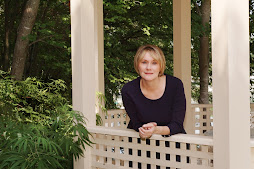
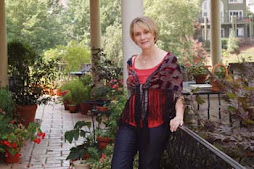
This week on Words to Go, we chat with Southern authors about lessons learned while living down South. Today we welcome southern novelist
Mary DeMuth who isn’t afraid to write about life’s thorny and sometimes complex themes, but bathed in beautiful prose. She offers expert advice through her non-fiction parenting books. But her real-to-life novels inspire people to turn trials into triumphs: Watching the Tree Limbs (2007 Christy Award finalist (and achingly beautiful) ACFW Book of the Year 2nd Place; and Wishing on Dandelions (2007 Retailer’s Choice Award finalist). Mary is currently working on three novels and an upcoming memoir.
PATTY: Welcome, Mary, to Words to Go!
MARY: Thank you, Patty!
PATTY: Mary you are a transplant to the South. When you and I first met, it had not been long since you and your hubby had come back from France where you planted a church. Being a church planter’s wife too, you and I compared a lot of notes. But then I was so surprised at the many things we had in common except for the minor fact that you were a transplant in the South while I had grown up a Southerner. But your novels are clearly informed by a distinctive Southern voice very much in the tradition of today’s hybrid fiction authors like Sue Monk Kidd and Barbara Kingsolver. But first of all, how difficult was it for you to acclimate to the South?
MARY: Having come from the North and being a Yankee-ish imposter, it was true culture shock for me to have the Saturday evening news give the weather report “for your commute to church in the morning.” For a long time it felt foreign to have so many references to God and church in the media and on the street.
PATTY: We’re seeing a lot of that type of practice go by the wayside here in Charlotte as the New South grows more analogous to northern regions. But do you see that as a good thing or not?
MARY: I now appreciate that Southern folks at least have an understanding of God and a rudimentary view of His ways. This certainly was not the case in Seattle, per se. Nor was it something you could count on in France (We lived there nearly three years.) There’s something comfortable about knowing that the majority of folks you run into at least understand the concept of a personal God.
PATTY: I agree that faith down South is a comfortable fit. How could it work against us, though?
MARY: One strange phenomenon we discovered when we moved from Seattle to Texas and France to Texas was that Christians in more secular or persecuted contexts tended to truly live out their faith.
PATTY: How were they different?
MARY: They either were Christians or they weren’t because there was no societal pressure to conform to Christianity. So you can imagine how strange it’s been to see so many folks use the name of Jesus so casually and then fail to truly follow Him. In our view, you either love Him or you don’t. This southern cultural view of Christianity is something we rally against.
PATTY: Well, for instance, my hubby is now a pastor. But he adopted his parents’ faith without surrendering his will to Christ. He shares now about how emotionally bankrupted he was because he had not embraced a genuine passion for and trust in God. So what you’re saying makes sense—that claiming to be “of God” needs to be followed by a commitment to a true apostolic faith. But it seems that you’ve found your balance culturally now, especially since your novels are so clearly informed by the South. How have you changed in your love for people here in the South? Do you have a story to share about that?
MARY: When we moved from Seattle to East Texas, I felt really out of place. I didn’t look like others. I didn’t talk like others (which folks were kind to point out) and I didn’t cook like anyone I knew.
PATTY: We can forgive you those few transgressions.
MARY: I grew disillusioned when an acquaintance thought my ham and bean soup was possum stew.
PATTY: Well. . .
MARY: And when I called a new friend to complain that some folks were hunting squirrels and eating them for dinner, she paused a really long time before saying, “Um, my husband shoots squirrels and we eat them.”
PATTY: That is Texas for you. It is in some ways like Arkansas-- a whole ‘nother country—and I say that with the greatest of affection for the Southwest having grown up there and written five novels set along the Texas-Arkansas border. ;) I’ll have to tell our squirrel brain story one day. But back to Mary—you were saying?
MARY: But there’s something beautiful about one memory I have. I was feeling particularly lonely, out of sorts, and my new friend JoAnne invited me over for lunch. While our kids ran around and played, she methodically cut onions and potatoes. “This is what I make when we’re down to our last bit of money,” she explained.
PATTY: We do have a tendency here to demonstrate our ways and then translate it for newbies.
MARY: During our conversation, where she lightened my loneliness, the most amazing soup scented the room. By the time I ate it, I knew I’d arrived “home.” And I loved JoAnne in that moment.
PATTY: Your story is a beautiful metaphor for the aroma of Christ that arises from Southern believers. It’s a natural love and empathy for those who are down on their luck or needing a friend that is expressed through cooking and hospitality. Here our faith goes beyond religion—it’s truly relational. I met a dozen JoAnns when we moved from a Missouri Bible school to Louisiana. And just like her, they would seat me at the kitchen table, start chopping up food, and then explain to me why they were doing it—and I lapped it up. That’s where I truly learned how to both cook and include others in my meals on the fly.
MARY: It’s the best part of the South—the sweet hospitality, the shared communion around a table.
PATTY: I agree wholeheartedly. Mary DeMuth, we’ve loved chatting with you today here at Words to Go. It’s a week of authors sharing their Lessons Learned While Livin’ Down South. I so appreciate the feedback from some of our Louisiana friends this week too. I still think of you when I make jambalaya. But, of course, I think of my Texas friends when I make real chili—not with squirrels, though.
Both Tamera and Mary have each donated three books for Friday’s Big-Haired Southern book give. I can assure you, you’re going to like them a lot! When you leave feedback, your name is put in the big straw hat for Friday’s drawing. Just for fun, why not tell us the state you reside in too?
Tomorrow, Southern author Rachel Hauck shares more lessons from her life in the South.
You won’t want to miss it!



 Posts
Posts