Please check Saturday's blog for list of book-give away contestants!
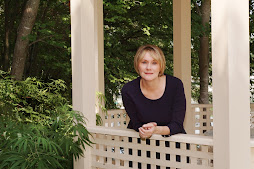
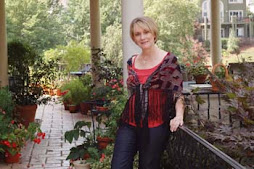
Author Tamera Leigh was born to Southern parents who, even though they were transplanted in Phoenix, Arizona, forever carried with them and passed on Southern roots to their four offspring. Tamera’s Southern Discomfort series is set in North Carolina. Tamera is now a happy Tennesseean. Welcome to Words to Go, Tamera!
TAMERA: Thanks, Patty!
PATTY: Tamera and I are discussing the things we carry and how place informs life and our storytelling. Tamera, although you weren’t reared in the South, you were reared by Southerners. And now your novels are set in the South. Want to explain how writing about the South became important to you?
TAMERA: What I didn’t account for was that my parents had carried the South with them and that, unbeknownst to their children, those roots took hold in their three girls and one boy. As our parents tended to be loners, we assumed our classmates also enjoyed dinner around a table set with fried chicken, biscuits and gravy, and pickled corn (Goodness, that pickled corn!).
PATTY: That was a surprise to me too, that the rest of the country didn’t cook like us. My mother cooked with pan drippings, lard, you know, regular stuff.
TAMERA: As for the lack of “Yes, ma’ams” and “No, ma’ams,” we assumed our peers were simply being rude and that, at least, their parents were getting the respect due them in their homes.
PATTY: Exactly, Tamera. As I travel, every so often I’ll respond with a “Yes, ma’am,” just to see the response. It’s a response as natural as breathing here, a sign of great respect.
TAMERA: Of course, the older we got, the more we suspected there was something more to us than met the eye and ear. And the proof was found when I returned to my parents’ roots when my husband and I moved to Tennessee thirteen years ago.
PATTY: How so?
TAMERA: It turns out that the South isn’t only in my parentage. Yes, there was some culture shock involved in our move, but with a bit of stretching and wiggling, I discovered that the glove of the South fit pretty well.
PATTY: Of course. It’s such a gracious skin. ;)
TAMERA: In fact, my mother is no longer the only woman in our family with a drawl
PATTY: I prefer to think of it as part of our glory.
TAMERA: It kind of sneaks up on you.
PATTY: Yes, taking up residence in our vowels especially and giving us extra syllables we didn’t know we needed. I’m curious, though. How did faith play into what you write?
TAMERA: Despite disappointment, loss, and hardship, there was one thing my mother never questioned—that God was with her and would carry her and her children through every difficulty. It was part of her raising, and though she became disillusioned with organized religion, she passed on her beliefs without apology.
PATTY: My mother, too, struggled with organized religion but never would have considered not believing, praying. What about you?
TAMERA: I struggled to believe as she believed, but once my husband and I rooted ourselves in the South (AKA “The Bible Belt”), my faith found its rhythm, first in a little Methodist church, and later in a community church where a multitude of generations knew one another beyond those couple of hours on a Sunday.
PATTY: Doing life together, so to speak.
TAMERA: They cared and showed it by words and actions. They even welcomed the western transplants that appeared in their midst. Of course, they were delighted to discover that one of those transplants—moi!—was returning to her mother’s roots.
PATTY: Southern people have so many distinctions that are shared. One is that of loving people, taking others at face value. What is your favorite memory of a Southerner who taught you about love?
TAMERA: The one person who stands out is Miss Virginia, an elderly woman who bustled over to greet my husband, my two-year-old son, and me that first day at the little Methodist church in Goodlettsville, Tennessee. She was charming and welcoming and determined to draw me into her life. The first day that she invited me into her home, I sat in her front parlor and sipped tea as she kindly told me in her deep Southern drawl that I shouldn’t be discouraged if it took our family a while to feel comfortable in our new community. “Things move slower here in the South,” she said, “though I’m sure your mother told you that.”
PATTY: I hear that complaint, if you will, often issued by transplants, that the slowness of people drives newbies a little crazy. So did your mother warn you about that?
TAMERA: Yes, my mother had told me that, but as a result of Miss Virginia’s advice and guidance over the years and the birth of our second son in a Nashville hospital, it didn’t take as long as expected for our family to feel the fit. Or for the South and its embraceable faith to work its way into my writing.
PATTY: I love that “embraceable faith” comment, because it’s so telling. So do you consider yourself sold out to southern storytelling now?
TAMERA: Completely, Patty. Gone are the days when I set my stories in medieval England, casting knights and ladies to play the parts. Now are the days that I more often turn to my present for a setting, as I did with Splitting Harriet and Faking Grace, and will do with my Southern Discomfort series that launches in September with Leaving Carolina. It’s good to be home, and I look forward to the day that I’ll be able to say I’ve lived in the South longer than any other place.
PATTY: And we look forward to more books by you, Tamera. Tamera Leigh, Southern novelist and author of the upcoming novel Leaving Carolina.
Leaving feedback will enter you in Friday’s book give-away including three novels by Tamera Leigh. Tomorrow we chat with Southern novelist, Mary DeMuth. Thanks for blogging this week at Words to Go, as we journey down South and sit on the front porches of our favorite Southern authors sipping sweet tea and nibbling lagniappe.



 Posts