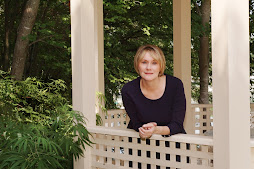
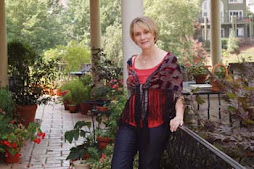
This has been an amazing week as authors share their stories of how walking through some very deep valleys has helped to deepen their perspective on life, thus the Greening of the Soul. Today suspense writer Amy Wallace shares a personal story that will hold you spellbound as her Deep Chocolate Suspense will hold you spellbound. Amy Wallace, welcome to Words to Go!
AMY: I’m so glad to be here, Patty.
PATTY: What was your first remembrance of being initiated into the world of suffering.
AMY: Two circumstances come to mind when I consider my initiation into suffering. The first, was a diagnosis of diabetes when I was a senior in high school, already scared to death about the “real world” at my doorstep. The second was attending the funeral of a friend after praying for his healing from cancer for three years.
Both of those experiences stripped away any ability to control my spinning world. Asking God WHY used up a great deal of energy. As did anger. And doubt. I mean, how could God be good when life physically and emotionally hurt so much?
PATTY: In our culture, we tend to define good as something that happens to bring us pleasure rather than something that intrinsically makes us a deeper person. That’s why we default to bargaining with God instead of thanking him for walking with us throughit.
AMY: Looking back, the blessing of pain slowly crafted something of beauty in my soul, much like rushing water carved out the beauty of the Grand Canyon.
PATTY: So true. We forget about the beautiful thing that comes out of our time of desolation.
AMY: I learned at an early age that my choices had serious consequences: if I ignored a low blood sugar, I could die. If I ate too much without taking insulin or if I refused to deal with minor illnesses that skyrocketed my blood sugars, I could die or be seriously injured. Diabetes grew me up fast and taught me that dependence on God was the only good option for handling life. My chronic illness also gave me an early understanding that God is still at work, even in the painful portions of life.
PATTY: When we led a hospital ministry, that’s what we noticed about children with chronic and life threatening illnesses. They were wise beyond their years.
AMY: Watching my friend’s health deteriorate and then watching helplessly as God took him home, shook me to the core. For the first time in my life I didn’t want to talk to God. I’d prayed for Ken and God ignored me, why talk to Him about anything else?
PATTY: It’s not that God isn’t used to that type of response or can’t handle it, it’s that we slip away from the umbrella of his benefits when we run from the shelter of his wings.
AMY: When I turned my back on God, everything else slipped down that steep slope and crashed. But Ken’s widow spoke into my pain about the grace of God and how He gave her what she needed to live and He’d do the same for me. If I let Him.
PATTY: So you did. And how what did that unpack in you?
AMY: God also used these lessons to make me available to others in their pain. I’ve had the honor of being that helping hand to pull someone out of the pit that others have been to me. It’s beautiful to walk through that experience and see 2 Corinthians 1:4-5 lived out. “…who comforts us in all our troubles, so that we can comfort those in any trouble with the comfort we ourselves have received from God. For just as the sufferings of Christ flow over into our lives, so also through Christ our comfort overflows.”
PATTY: I find that trait a commonality among believers who have “overcome” suffering, especially when suffering becomes intrinsic instead of going away—like Patti’s pain, my grief, etc.Has your view of God's sovereignty been redefined? OR would you like to share an example of how the process of suffering has helped reshape the way you explain God's often misunderstood nature?
AMY:My view of God’s sovereignty has been stretched, tumbled and strengthened. Having walked through suffering and come out with fewer answers and more empathy, I now speak into other’s lives differently than before…sometimes by silence, sometimes by sharing my story, and sometimes by lending a friend my hope until they find theirs again.
PATTY: In our noisy, advice giving culture, we have to relearn the healing practices like the quiet vigil of presence or silent listening.
AMY:I don’t pretend to understand God or have many answers, but I’ve looked into the face of pain and found a friend there to walk the path with me, a friend who never gives up, never lets go and never loves me less.
PATTY: That makes you my new best friend, Amy. And all of us are so happy to invite you here to share what you’ve gleaned from the depths of suffering.I understand you come bearing gifts.
AMY:Patty, I’d be happy to give a copy of Healing Promises away. In its pages are my wrestling match with God when my friend died of cancer and the tender way God showed Himself real to my questioning heart.
I think that a lot of our readers would love to have that or buy it. So we’ll add Healing Promises to our growing basketful of books in Saturday’s book give. Enter feedback in today’s blog chat and your name is entered in the Big Staw Hat for Saurday’s give. Tomorrow my friend novelist Rene Gutteridge will share her own story of how she walked through the valley of suffering and it’s all here at Words to Go. Here’s to God blessing your way with beautiful greening paths, friends!
Author Patti Hill has a seemingly perfect life—two sons in college. Her hubby’s gardening business has led to his own radio and TV show and, judging from the organic book covers, has certainly informed Patti’s novels. But Patti’s first novel also came with some nearly debilitating news. Today Patti Hill shares her own Greening of the Soul story. Welcome, Patti, to Words to Go!
PATTI: Thank you, Patty!
PATTY: You know we’re going to confuse people.
PATTI: I’m the one with the “I”.
PATTY: None of us ever asks for trouble in life. But sometimes it comes knocking, seemingly out of nowhere, doesn’t it?
PATTI: I’ve avoided reading I Peter, James, and those pesky beginning verses in Romans 5 whenever possible. I don’t like suffering. Pain hurts. Count it all joy? I don’t think so. Not that I didn’t have the doctrine of suffering down. I knew exactly how God used suffering in other people’s lives to refine them, draw them into a new intimacy with His Son, and to clear the dross out of a believer’s soul. So, other than giving birth to two sons and chronic migraines, pain was for people who needed it.
PATTY: If there’s one thing we know, life comes with the good and the bad, doesn’t it?
PATTI: For me, writing my first manuscript and my journey of suffering are a story that must be told together. I quit teaching in the spring of 1999 to answer the call to write that I’d first heard as a teenager. I needed every one of those in-between years to glean skills worthy of the Master. I’d earned an English Literature degree, attended fiction-writing seminars, and most importantly, developed a work ethic.
PATTY: For those emerging writers who visit Words to Go, this is often where the sheep and the goats are separated—the work ethic is ground zero for a pro writer.
PATTI: Once I no longer had 65-hour work weeks to hold me back, it only took a year to garner the courage—isn’t that what research is for?— to type the first words of Like a Watered Garden. I needed a deadline, so I paid for a critique at a writer’s conference. Lauraine Snelling was working as an acquisitions editor for Bethany House at the time. At our meeting, she sent me home to write two more chapters and a proposal. She also gave me the business card of her literary agent and advised me to contact her as well.
PATTY: And go to those writer’s conferences . . .
PATTI: I sweated over those first three chapters and prepared to mail the proposal to Bethany House and the literary agent. I remember sliding the proposal into the envelope, aware that my hands ached. Strange. Since I can read English and had access to the Internet, I diagnosed myself with carpal tunnel syndrome. I also prescribed treatment: two UGLY splints to wear 24/7.
PATTY: My doctor hates it when I self-diagnose.
PATTI: But the pain got worse and spread to my feet. Touching the gas pedal of the car became increasingly painful. I stopped driving and consulted a parade of doctors. Each one shook his head and sent me for one more scan in the MRI machine, six in all. And a spinal tap. And evoked response tests. And nerve conductivity tests. And odd exercises and home traction machines. Electrical current acupuncture was a definite low point. Nothing helped.
PATTY: This was probably when you were beginning to feel that awful loss of control over life, wasn’t it?
PATTI: Yes. Every day, I woke up with pain in my hands and feet that grew increasingly worse through the day, radiating up my arms and legs. By 9:00 AM, I wondered how I was going to make it through the rest of the day. The pain felt like blunt stakes being pressed through my hands and feet, a bittersweet fellowship I shared with our Lord.
PATTY: A beautiful metaphor for a horrible season.
PATTI: I couldn’t touch the dog or fold towels for the pain. It took several days to recover from riding in a car.
PATTY: Yet, your career as a novelist stretched before you.
PATTI:I started praying that Bethany House would reject the novel.
PATTY: For anyone suffering writer’s angst, this speaks highly to your degree of pain you were enduring.
PATTI: Exactly. God answered that prayer, so I stowed the manuscript in a spare closet and wept as if someone dear had died. The agent, however, called several days later to offer representation after reading the proposal. I told her I wasn’t sure I would be writing. After that phone call, I begged God to heal me. “Lord,” I said, “I can’t be a better person than I am right now!”
PATTY: Never pay that.
PATTI: He disagreed.
PATTY: But you responded in a healthy way.
PATTI: I was desperate. I spent my days reading every story of healing in the Bible, looking for a pattern, hoping for a surefire litany of sorts to compel God to heal me. There are no patterns and certainly no magic words. Healing is as individual as snowflakes, a demonstration of the Lord’s compassion and sovereignty. My goal was to cling to the hem of His garment. The pain had flayed me. The doctors had no answers. Jesus was my one and only hope.
PATTY: But if writing was painful, then . . .
PATTI: I could only read for short snippets of time. The rest of the day was spent on the floor, flat on my back, listening to worship songs like Just Give Me Jesus and I Am. I set the timer for 30 minutes because my PT wanted me to keep moving. I walked from the living room to the bedroom where I kept a stack of index cards with the names of my family members written on each one. I shuffled the deck and prayed for the person on the top card, before returning to the sunbeam and stereo. My world grew smaller and smaller.
PATTY: I’m sure you saw your dream slipping away as you struggled through each painful second.
PATTI: The months ticked away. My symptoms worsened. I became weaker and weaker. I taped instructions for my funeral to the inside cover of my Bible and told my husband to remarry—anyone but a woman named Bambi.
PATTY: This is a good idea. Note to self.
PATTI: My ministry during this time was twofold. First, I forgave well-meaning people who asked me if I harbored unconfessed sin in my life.
PATTY: Job’s friends. I’ve had a few too.
PATTI: You can bet I took care of that early on. I wanted so badly to live in faith during this time, but I didn’t know what that looked like. Would I stop going to doctors? Would I shred my exercise instructions? Honestly, I couldn’t picture what faith looked like with chronic pain that left me feeling raw and useless.And then I came across the story of Jesus taking the disciples across the lake after a particularly exhausting day of healings and teaching. In Luke 8 Jesus says, “Let’s go to the other side of the lake.” A vacation? The disciples jumped aboard, and remember, seven of them were fishermen. They knew boats. Jesus soon fell asleep on a bed of nets. His dreaming continued even when a squall swamped the boat. The disciples woke him saying, “We’re going to drown!”
PATTY: I’ve said that a few times, if I’m going to be honest.
PATTI: My throat tightened as I read this account. I knew just how those poor disciples felt. I’d followed Jesus for thirty years, and now, when I finally stood at the threshold of my calling, my life was being drained away by undiagnosed pain, and soon, if a majority of the doctors were right, I would be dead. I felt betrayed.
PATTY: But for every story I’ve heard like this, there is always that crisis of faith.
PATTI: The Bible story continues. Jesus wastes no time. He rebukes the wind and raging waters, and “all was calm.” “Calm my storm, Lord!” was my response. “Please, Lord, please.” But after calming the storm, Jesus turned to the disciples and asked, “Where is your faith?”How could he be so cruel? Didn’t he understand the fragility of humanity? The boat was sinking. I was getting weaker and weaker, the pain intractable. Have a heart, Jesus!
PATTY: Thankfully, he does.
PATTI: It took me a few days, maybe more, to ask Him this: If the disciples’ reaction to a real threat on their lives demonstrated a lack of faith, then what is faith supposed to look like when a boat is sinking? Would I have to stop baling, also known as hunting the Internet for a cure? Would I have to stop clinging to the mast, my way of living in fear? Should I rebuke the waves, take command over my malady? What?
PATTY: It’s true. My first response is to reach for the high road, for the character to do the right thing. But when the right thing is a muddle of multiple choice responses, all we can do is just stand.
PATTI: Yes! He responded. “I want you to lie on the nets with Me and take a nap.” “I drowning here,” I replied. “I told you we were going to the other side of the lake. Have I ever lied to you before?”“Never.”“Then rest with Me.”“Can I still go to my doctor’s appointments?”“Sure.”“How about my sleeping pills?”“I’m delivering you to the far shore. What happens between now and then matters very much to Me, but rest with Me for the journey.”
PATTY: This sounds familiar.
PATTI: Metaphors are my stock and trade, so I asked, “Where is this far shore? Is it like a shoreline where my pain ends and health begins, or is it the other side of the Jordan River? That could be thirty-five years from now, maybe longer.”
PATTY: It’s often the desire for control that he’s asking us to relinquish.
PATTI: “Whether you arrive at the far shore tomorrow or many years from now, I want you to rest with Me.” So, faith looks like a nap on fishing nets. I laid in the sunbeam, picturing myself on a swamping boat. The roiling sea pounded the deck with wave after wave as I clung to the mast.
PATTY: I think we were clinging to the mast in yesterday’s interview too. There’s a lot of that going around.
PATTI:Going to rest with Jesus meant letting go of the mast and walking toward a small door to the hull. Even in my imagination, I made false starts, only to cling to the mast that offered only superficial safety. When I finally opened that door and stepped down the ladder, Jesus raised his arm, inviting me to lay with him like two spoons in a drawer. I accepted his invitation for three nanoseconds. On subsequent tries, I tarried longer and longer. I had my picture of faith on stormy seas. What a gift!
PATTY: Sweet surrender.
PATTI: At fifteen months, I had surgery to fuse C-5 and C-6 with two screws and a titanium plate. For all those months, a ruptured disc had been rubbing against the sacral sack of my spinal cord whenever I tilted my head forward as to read or eat. The pain didn’t go away instantly. In fact, I still face limitations, especially when it comes to typing.
PATTY: My friend Terri Blackstock has had to endure a similar life of writing in pain. New writers take heed and take care of your body. Start that yoga class now.
PATTI: It’s all done by God’s grace. Six months after surgery, I could type half a page, and a couple of months later, I was pounding out a page a day. Within a year, I was typing three pages a day. I’m sure Like a Watered Garden and my subsequent offerings have been more honest about the human condition and the struggle to believe in the dark places more, all thanks to His work in me during my journey of suffering. In fact, although I’m likely to be found clinging to the mast on any given day, I see evidence of His refining grace in every facet of my life. And I am so grateful.
PATTY: The big debate among fellow sufferers who are also believers is how they come out of it trusting or not trusting in God's sovereignty--or redefining it. Gerry Sittser says, "The terror of randomness is enveloped by the mysterious purposes of God. . .Loss may appear to be random, but that does not mean that it is. It may fit into a scheme that surpasses even what our imaginations dare to think." Patti, has your view of God's sovereignty been redefined?
PATTI: I’m not a theologian. Truthfully, I don’t care why I suffered. Whether God pointed His finger at me or He chose to use a random injury to demonstrate His faithfulness doesn’t change the result. Others will put it more eloquently, but suffering has humbled me.
PATTY: Simplicity is eloquent.
PATTI: I can say “Thy will be done” and mean it. I’m only passing through, and while my passing through has been amazingly sweet on the whole, I definitely live for the far shore. I’m more aware of my homesick heart. I long to drink from the wedding cup in Jesus’ presence, to see the little mansion He’s prepared for me, and to join the throng in worship. And when I see Him face to face, I will kiss each palm with gratitude.
PATTY: It’s that eternal perspective that Steph and I were talking about yesterday. Interesting that each week, similar themes connect all of our stories into one big eternal story—God is in charge and we are not! Patti, thank you so much for stopping by and giving us a Word to Go. God has certainly greened the garden of your beautiful soul.
PATTI: Thanks for having me, Patti. I would like to leave you all with some presents from my garden.
PATTY: Please say books.
PATTI: My entire library. Like a Watered Garden, Always Green, In Every Flower, and The Queen of Sleepy Eye.
PATTY: You totally rock, girlfriend. Readers, just leave your feedback today and every day and your name will be entered in the Big Straw Hat for a tremendous garden of books to be given away Saturday! Thanks, Patti Hill for stopping by our front porch. That’s all for today at Words to Go!
Tomorrow join Patty as she chats with novelist Amy Wallace who shares another great "Greening of the Soul" story!
Stephanie Grace Whitson and I were mere acquaintances many moons ago when her husband contracted an incurable cancer. A few months later, when facing the shock and loss of losing our daughter, I reached out to Steph and we supported each other in cyberspace and also on our knees. She is the author of numerous historical fiction novels and in 2005 authored How to Help a Grieving Friend: A Candid Guide for Those Who Care. It’s my extreme pleasure to introduce you to award-winning novelist Stephanie Grace Whitson.
STEPHANIE: Thank you, Patty!
PATTY: Steph, what’s your earliest inkling that faith was going to be your forever lifeline?
STEPHANIE: My personal faith in a sovereign God has been a constant in my life for as long as I can remember. I honestly don't know when I became a believer. I do know that when I was baptized at age nine, I understood as well as any nine-year-old can the basics of the gospel message.
PATTY: Parents can help so much.
STEPHANIE: Beyond saving faith, I've been privileged to be part of a wonderful teaching ministry for years, so when 1996 arrived, I had a lot of head knowledge about what the Bible says. But 1996 left me feeling like a grain of sand at the mercy of hurricane-sized waves. My best friend died of breast cancer. Both my parents died within six weeks of each other. My oldest daughter and I were in a terrible car accident. My youngest daughter went through a prolonged and terrifying illness. And my husband was diagnosed with an incurable form of non-Hodgkins lymphoma. Cancer thrusts uncertainty about the future into our lives along with chemotherapy and medical visits and second opinions and, finally, a bone marrow transplant. Because Bob was an elder in our large church we had an ever-present sense that people were watching to see how we would we cope, and we had a strong desire to be found faithful. But we were terrified.
PATTY: We understand the aquarium and how people expect you to “behave” in a storm. But happy affirmations certainly fail you through devastating loss, don’t they?
STEPHANIE: More than once during the next few years I remember lying face down--literally face down on the floor--crying out to God for help. I didn't doubt his love for me. I didn't doubt His sovereignty. And yet, knowing these things and claiming the promise of Romans 8:28 didn't spare me the pain of the process. The fierceness of that emotional pain caught me off guard. I was a believer. I was well taught in the things of Scripture. Shouldn't I hurt less? Fear less?
PATTY: I compare it to being lashed to a ship’s mast in a hurricane. We tend to question our resolve and courage right about the time those virtues are hitting the cellar.
STEPHANIE: One of the most profound things I learned during that time was that faith doesn't protect the faithful from pain or fear. That's not what faith is for. Faith is what enables us to endure the pain and the fear while we cling to the truths presented in God's Word about who He is and what He is doing this side of heaven.
PATTY: I’d like to add, if Steph and I sound courageous today, we have the luxury of time and the healing process between us and the loss now. We’re speaking from a perspective that’s been earned while hanging from our fingernails. Steph, you did buckle, didn’t you?
STEPHANIE: Realizing that Bob was going to die drove me to my knees. I was living the worst thing I could ever imagine happening and I was powerless to change it. It was devastating. And yet I never doubted it was part of God's plan for me, because the God of the Bible is sovereign over the affairs of men. That is simple to say. Hard to live.
PATTY: I was probably a greater wreck as for many months I couldn’t vocalize God’s sovereignty to a friend who asked me to try. I had a lapse of spiritual vocabulary.
STEPHANIE: Bob used to say that wherever cancer took us was a place to share our faith. After he died, I had to come to a place where I could say "wherever widowhood takes me is a place to share my faith." The process was difficult, but God eventually took me to the place of peace where I could say "yes" to being alone. Widowhood was not my choosing, but I could be content in that place for as long as God asked me to remain there.
PATTY: It’s that moment where you found your Shelter in the emotional onslaught.
STEPHANIE: In human terms there were moments during those years that were horrible. Moments that still make me shudder when I think of them. But I can honestly say that because of cancer and widowhood, the sufficiency of God isn't some vague theological concept to me. It is real. I knew things intellectually before 1996 that I have now experienced. My faith is stronger.
PATTY: Yes, it was easy to “be good” and quote scriptures to others suffering pain when my own life was cheesecake. Everything shifts, doesn’t it?
STEPHANIE: Yes, one thing that has changed profoundly is the way I pray. I was struck not long ago with the realization that in their darkest moments, many of the giants of the faith didn't ask for deliverance. They requested perseverance and endurance.
PATTY: A few did, yes.
STEPHANIE: When I pray for others now, I pray less for the removal of trials and more for the endurance. Why? Because so often it's the trial that provides incredible opportunity for us to shine the light of Jesus into places we never would have gone without that trial. I think God wants me to spend less time begging for escape and more time praying for endurance.
PATTY: You become galvanized in a new skin. That doesn’t mean you’re pain proof, but have the endurance to weather difficulties with greater ease. I understand we have a mutual friend.
STEPHANIE: My brother in Christ Randy Alcorn was one of many prayer warriors who helped encourage Bob and me through our valley. Randy consistently challenges people to "invest in eternity," and that phrase has truly changed the way I look at trials.
PATTY: Randy is so faithful like that. When Jessi died, Randy was right there keeping vigil over my Randy and I. He’s like a spiritual medi-vac for God. He reminded me of the friends in the gospel who couldn’t get to Jesus, so they cut a hole in the roof and lowered the lame friend down through the ceiling. He knows who to go to on our behalf—his “eternal perspective” comes in handy when grenades are being thrown at you.
STEPHANIE: With fear and trembling I try to look beyond this "momentary light affliction" and forward to the "eternal weight of glory." Now, I emphasize again that I do these things "with fear and trembling" because I am human and weak and I just plain do not LIKE having to go through trials. But Bob's cancer and subsequent death were the catalyst for a major shift in the way I think about trials.
PATTY:The big debate among fellow sufferers who are also believers is how they come out of it trusting or not trusting in God's sovereignty--Has your view of God's sovereignty been redefined? OR would you like to share an example of how the process of suffering has helped reshape the way you explain God's often misunderstood nature?
STEPHANIE: There is always some tension in the life of faith. In the area of suffering I sometimes picture this: on one hand you have suffering and on the other is God's sovereignty. It is impossible for what I call my "pea-brain" to put the palms of those two hands together and lace the fingers. It's as if those two hands are opposing poles of a magnet and the more forcefully I try to bring them together, the more forcefully they are held apart. The life of faith takes place in that space between those two seemingly opposing forces.
PATTY: Beautiful example, Steph.
STEPHANIE: To me, faith is deciding to willingly remain in that place and consciously accept that not all my questions are going to be answered this side of the grave. I'm talking about a deliberate choice here, not fatalism.
PATTY: Yes, unfortunately in this post-Christian age, everything has to be explained.
STEPHANIE: The Scriptures tell us that "the secret things belong to God." I find great comfort in that phrase. One of the reasons that Job is my favorite book in the Bible is that the only answer Job was given for the awful things that happened to him was, "I am."
PATTY: We ask out of our smallness and God answers out of His bigness.
STEPHANIE: Job finally got to the place where he stopped questioning and said, "I place my hand over my mouth."
PATTY: I’m still working on that one.
STEPHANIE: I don't know that Job ever knew about God giving Satan permission to do what he did. But I think Job will be rewarded throughout eternity because of the generations upon generations of people like me who have learned from Job and been encouraged to endure their own tough times. If Job had a chance to go back and relive his life and have it be great, I think he'd choose to go back and have it be exactly as it was. Because now Job SEES what God was doing and he's being rewarded for it and he realizes that, in light of eternity those trials were "momentary light affliction." But while Job was on the earth, "the secret things belonged to God." They belong to God. And so do I.
PATTY: Stephanie, for those of you who don’t know, is a professional quilter. Notice how beautifully God has sewn together the patchwork of pain in her life and made it a thing of beauty. God finishes us and continues to finish us when we surrender to that work, no matter how painful.
STEPHANIE: Even as I share this, I want to make it very clear that while I believe them with all my heart, I don't always apply them consistently. Since Bob died I've remarried. When my new husband went through a situation that involved words like "suspicious tumor" and "surgery" and when I had the "cancer" word applied to me a couple of years ago (I'm fine), I had to go back again to the same reminders.
PATTY: And he’s a man of faith too, isn’t he?
STEPHANIE: When asked once how he could endure the illness and death of his first wife, my husband Dan said, "Life is a multiple choice test. A: God's in control. B: He's not. I choose 'A'." I've learned that that choice has to be made over and over again through life, sometimes about big things like cancer, sometimes about smaller things I don't understand. By God's grace, I choose 'A'.
PATTY: Steph, we’re so honored to have you share your story on Words to Go, and how pain and endurance contributed to the Greening of your beautiful soul. Thanks for stopping by.
STEPHANIE:Thanks for inviting me, Patty.
If you are going through your own dark night of the soul, we hope you found encouragement here today. I have a copy right off the presses of Stephanie’s newest novel A Claim of Her Own plus Steph is going to give away autographed copies of her novel Jacob's List and her How to Help a Grieving Friend book! I’m going to put them all in Saturday’s book give. So leave feedback and your name goes in the Big Straw Hat for the drawing. Tomorrow novelist Patti Hill shares her own story of how her soul grew in the valley of darkness and uncertainty.
In uncertain times, we can become confused when the valley seems to keep getting deeper, the bottom nowhere in sight. This week, five authors will share five different valley stories. But I ask you to consider how each author was changed through the process and then you may share with each other and us your comments.
Bestselling novelist Roxanne Henke is such a fun lady. She is lovely inside and out and asks that you call her Roxy. Her most recently released novel is On a Someday. Like me, she is a speaker and a CLASS graduate too! Today she shares with us her own story of THE GREENING OF THE SOUL. Welcome, Roxanne, to Words to Go!
ROXY: Thank you, Patty. I’m so glad to be here!
PATTY: Roxy, your story goes all the way back to when you were very young, doesn’t it?
ROXY: Yes, Patty. After a seven year roller-coaster ride with cancer, my dad died when I was seventeen years old.
PATTY: So young, and so many things left unsaid relationally, I’m sure.
ROXY: When this all happened, I was at a stage in life when my dad and I butted-heads often (mostly because of my stubborn attitude) and didn’t apologize nearly enough.
When my dad died I knew he loved me and I loved him, but I was filled with guilt that I hadn’t shown him my true feelings the way I should have. The easiest way to cope with those feelings was to stay emotionally tough. I barely shed a tear for fear if I started crying I’d never stop.
PATTY: Tamping down is such an unhealthy practice. It’s often the default behavior in our culture but sadly the most toxic.
ROXY: I didn’t know how to grieve and so I didn’t. I simply pushed aside my sadness and went off to college. And then I dropped out. And returned. Switched schools. Dropped out. Well, you get the idea.
PATTY: Not only do I get the idea, but followed the same pattern myself.
ROXY: Fast forward a bunch of years. . .I was happily married with two kids. In the intervening years my best friend in the whole world died from breast cancer (at the age of 29). An Aunt died of cancer. An Uncle died of cancer. Another friend’s child was diagnosed with cancer. And my favorite cousin was, too. Cancer was everywhere and still I denied its effect on me. Until a lump on my daughter’s arm turned out to contain pre-cancerous cells.
PATTY: You must have been to the point of explosion having practiced stuffing for so long.
ROXY: She had a couple of operations and was finally declared “all clear.” She was fine, I wasn’t.
PATTY: There’s always a Waterloo.
ROXY: No longer could I suppress my fears and grief. . .time had taken its toll and I slid into a deep, dark place. “Depression” the doctors called it. As much as I tried to deny the diagnosis, I couldn’t. After a series of medical tests there was no other explanation for the deep valley I was in.
PATTY: Some say that men deny depression, but we women do too.
ROXY: I railed and wailed to God. Why was I so miserable? Why now, when my daughter had been cleared of a cancer scare, was I in the grip of darkness? There was no answer. God was silent.
PATTY: He always does that.
ROXY: I was left to trudge through the night seemingly alone.I spent many, many hours in what I call my ‘prayer chair’ searching for answers. Calling on God to heal me. Trying to ‘think’ my way, pray my way, out of despair. But, most days, my mind was so muddled, my thinking so fuzzy, that I found I couldn’t even pray.
PATTY: Wrestling, stage two of surrender.
ROXY: It was then, in that pit of emptiness that I understood there is a reason we are called to pray for others. . .because there are times when we are unable to pray for ourselves.
PATTY: Why I have assembled a little intercessory prayer team for my book and speaking ministry.
ROXY: I spent many hours sitting in my chair, mostly in silence. . .sometimes in tears. . .simply sitting in the presence of God. In all the turmoil I was feeling my time with the Lord was often the only peace I might feel the entire day. The lowest point in my life was when I felt the closest to Him.
PATTY: I agree. But how would we survive those valley periods without Christ’s vigil over us?
ROXY: Eventually, with the help of doctors, counselors, medication, time, and lots of prayer, I climbed out of that pit. At the time I was grateful just to be feeling better. I still didn’t understand “why” I went through what I did. . .until almost ten years later.
PATTY: That’s why we write.
ROXY: Yes, exactly. I sat down to write a book. A fictional story that dealt with the topic of clinical depression. As I was writing that book I had the sense that those words were the “why” that had eluded me. God had a greater plan for my emotional pain. . .He wanted me to share my experience with others going through the same thing.
PATTY: And that is when your writing and stories become ministry.
ROXY: That book, “Becoming Olivia,” has ministered to countless people. When I speak, I’ve had people come up to my book table, pick up that book, hold it in front of me and say, “This book saved my life.”
PATTY: Wow!
ROXY: Little did I know how God would use my pain, my tears, my words, to minister to others.
PATTY: But now you do.
ROXY: Now, many years later, I do. He had a bigger plan and I am awestruck to be part of it.
PATTY:And we’re so thrilled that you continue to write and tell your stories to others, Roxy. Thank you for joining us today, Roxy.
ROXY: I’m glad I had the chance to share, Patty. Thank you.
I have great news. Roxy is going to give away Becoming Olivia in the drawing Saturday. If you’d like to leave questions for Roxy to answer, please feel free. You may share your own stories, whatever you’d like. But do leave feedback so your name will go in the Big Straw Hat for Saturday’s Book Give.
Roxeanne Henker is the author of the popular Coming Home to Brewster series...After Anne, Finding Ruth, Becoming Olivia, Always Jan, and, With Love, Libby. Also available...The Secret of Us, Learning to Fly, and my newest release: On a Someday! Check out her website at: www.roxannehenke.com
I've been told that there are emerging writers visiting Words to Go. I would like to invite you to take more time to revisit this past week's author chats. Memory is a potent resource for writing. I invite you to journal and write down specific scenes from your own past. For instance, the memory of little Karen Harrington standing on a tree stump yearning to see past her own yard is a vivid memory and its also true. Or Kathy Patrick in her bright yet eccentric clothes, Shellie Thomlinson in her thick glasses standing on top of her school desk singing The Streak Song, Melody Carlson believing she could get published in grade school, or the river that tempted me to look beyond my own small cup of a town. The flotsam of memory is great fodder for beginning your own story. The best way to start is to start. What are you waiting for?
Today's big winners for the book give are:
Joyce Mahan wins The Other Side of Darkness by Melody Carlson
Jennifer Eckert wins The Pulpwood Queens Tiara-Wearing, Book-Sharing Guide to Life by the Pulpwood Queen, Kathy Patrick
Congratulations, winners!
This next week on Words to Go we will visit the emotional subject of suffering and how the human soul grows through it as authors talk candidly about THE GREENING OF THE SOUL. Five days of popular authors will be your reason to come back and pay us a visit here at Words to Go!
One of the most exciting things about Words to Go is introducing a new author. Karen Harrington and I met at Girlfriend’s Weekend. She struck me first as a very reticent, but beautiful young redhead. But after she dragged me against my will out onto the dance floor at the Big Hair Ball, I realized I was quite wrong about Karen. But, hey, what happens at Girlfriend’s Weekend, stays at Girlfriend’s Weekend. Karen has written a compelling story called Janeology. It is part family saga, part legal thriller or what some folks call a hybrid or even, if may go so far as to say, spec fic. Karen is very warm and authentic and loved the idea about sharing her coming-of-age years with us. So I’m very excited to introduce you all to novelist Karen Harrington!
KAREN: Thank you for inviting me, Patty!
PATTY: Karen, I think that you, like so many novelists, can still revisit your formative years and easily revisit the emotional landscape that would eventually inform your writing.
KAREN: I have a theory about sensitive twelve-year old girls that I formed from, well, once having been a sensitive twelve year-old girl. I think they have a kind of wanderlust around this age. She senses there’s a big, interesting world beyond her common neighborhood and she wants to see it.
PATTY: I think that it’s why I repeatedly dreamed of flying at that age.
KAREN: She believes it’s not only different, but better, than her world. Problem is, she’s limited by what others around her can do for her, where and when they can take her. So she vacillates between falling back into a young girl’s thoughts and trying to stretch toward what? That nameless pulling forward toward a time when she’ll be independent. And since she can’t grow up any faster and get on with her life and experience all the world at once, she finds it useful to rev up her imagination.
PATTY: What do you see when you look back into that raw imagination of adolescence?
KAREN: Picture a girl standing on a dead, four feet tall tree stump in her front yard, looking out over the rooftops in her own blue-collar neighborhood. That’s me, around age twelve. I climbed this stump at night and looked at the houses and what I thought was a busy road just beyond our neighborhood. I stood up there until the stump finally gave out one night as I leapt off. But before that, it was my pedestal for a full summer. Spying on the neighborhood and the roads, I had all kinds of ideas about where everyone was driving. For example, maybe they were driving all the way to faraway Dallas! I saw families through their windows and conjured up what was being said and eaten inside, which was decidedly more interesting and flavorful than what took place in my house, I tell you.
PATTY: Ah, Coraline! Now, our readers can see how these transcendent threads are generated. Novelists never disconnect from the past but use the flotsam to float right into our story worlds. So your mom must have cooked like mine.
KAREN: No Hamburger Helper over there. I heard arguments and screeching car tires coming from the nearby apartments and instead of being afraid, I romanticized a lovers’ quarrel. Of course it was, I reasoned, because the very next sound coming from the apartments was someone playing a piano.
PATTY: Sights, sounds and emotions.
KAREN: My siblings thought I was a big dork for standing out there like a flagpole. They threatened to pelt me with basketballs. (This threat was carried out on more than one occasion.) And I can’t imagine what my single-dad father must have thought. Did he look out the window and shake his head and tell himself that it could have been worse? Did he rationalize that it was better than worrying about drugs or that boy down the street (who I dated for ten years against my Dad’s advice. Sorry Dad. He had a blue Camaro that matched his eyes.) At least Dad had the good sense to leave me there, because I might have found my way up to the roof if he’d prohibited me from the stump.
PATTY: Have you ever imagined being able to go back and see that little girl in you so that you could tell her that her yearnings were going to work out for her good?
KAREN: Wouldn’t I love to go back in time and talk to my younger self? Yes, I think I know all the reasons she wanted to stand there. I was beginning to understand there was more than one way to look at the world – one that you could make up, that you could make better with the right adjectives and dialogue. Maybe I was beginning to understand that if you have an unexplainable yearning to see something different, you could start by viewing the world from a different perspective. And if all you have is four feet of dead tree to prop you up and everyone thinks you’re a big dork, well, do it anyway.
PATTY: I think at that age it’s impossible to explain your yearnings except in sort of ambiguous summary that gets lost in the translation—so family members treat you like you’re one brick shy a load.
KAREN: All these years later, I’ve found that sitting in my front-yard and letting my imagination go is good for the soul. (Just don’t expect the blue-eyed boy to actually SAY the dialogue you’ve made up for him. You’ll be disappointed when he screws it up and just burps.)
PATTY: I’ve thought that before! A perfectly great conversation goes south just when you think you’ll use it. But even that is funny, Karen. How have you disciplined all of this emotional memory and placed it within the constructs of a story that caught the attention of a publisher?
KAREN:A long time ago, a writing professor said this to his class of delusional, over-confident novel writing students who just KNEW they were better than Stephen King and John Irving combined because it took them a whole YEAR to write their masterpieces: “Many writers have talent, but few have the temperament to make a career of it. This is why there are so many one-book published writers.”
Well, way to take all the fun out of writing, huh?
PATTY: If I had a dime for every person who has told me they have a novel inside them, I could help the whole country with this financial crisis. It’s so true, that while most people seem to delight in their own stories, they don’t have the discipline to navigate around their agendas, their time constraints, their wrong ideas about crafting a novel to actually do it. But you did it, Karen.How are you assimilating what that professor taught you?
KAREN: Honestly. Flash-forward eight years to that wonderful day when this author received her first publishing contract. I had a book. An ISBN. A page on Amazon! My career was launched. Now, I could just go back to writing the next great American novel, right?
No.
There is just as much work to come following the publication of a book. As you might imagine, it takes one kind of temperament to be a sensitive, solitary, disciplined person who can sit down for months and create a novel. But then there is the temperament that can also have a realistic, professional view on the publishing business – a business that sort of cares about your sensitive artistic feelings, but not as much as one would like.
PATTY: But it’s very unusual for someone as new as you are to the business to have your feet on the ground so early on. It was all those years of business writing that helped you build that sensitivity, I’m sure.
KAREN: I am so thankful that my professor gifted me with that reality. It continues to serve as a guidepost, like a sign that warns “slow down, curvy road ahead.” (i.e. – Are you going to be THAT kind of person and be a one-book wonder or do you have the temperament to make a career of it?)
PATTY: Emerging writers, take heed.
KAREN: After my book debuted last year, I was faced with any number of challenges that had nothing to do with the excitement of achieving my dream. Those challenges fell under the heading of wanting to vigorously defend myself against criticism, stretching the limits self-promotion, balancing work and life, or even the strange headiness of standing in a bookstore, being all puffed up with my authorly self, thinking it was a waste of time to sell three books in two hours.
PATTY: Yes, it’s not a life of laying on the sofa having grapes fed to you.
KAREN: My professor’s statement would bring me back to center like a slap to the forehead. Did I want to make this my career? Yes. Okay. That means being nice to everyone. Shrugging off criticism. Having a show-up-early-stay-up-late work ethic like any other profession. And, of course, getting back into that solitary space of being a writer that feeds my soul.
PATTY: And that feeds your books.
KAREN: And if you want to know, I went back to my Alma Mater, published book in hand, and told said professor in person how grateful I was for this advice. A proud day, that was.
PATTY: Congratulations on being able to do that. I was in a writing group led by a pubbed novelist. Two members had just announced that they had gotten contracts for multiple books.
I was feeling a little anxious. And then it happened—an editor called and wanted to offer me a multiple book deal. I was so excited. But I waited until everyone in the group had shared about their writing week, the usual preliminary stuff and then shared that I too had gotten a contract.
Those are very heady seasons. But as you say, Karen, so wisely, short-lived as we return to the solitary life of writing.
Thank you, Karen, for sharing today. Kathy Patrick is giving away her Pulpwood Queens Guide and Melody Carlson is giving away The Other Side of Darkness. Please leave your feedback and it will be entered in Saturdays book give-away!
Next week popular novelists Roxanne Henke, Stephanie Grace Whitson, Patti Hill, Amy Wallace, and Rene Gutteridge will chat with us about a very deep and emotional subject—that of the suffering we all face from time-to-time and how we grow through it. Join us next week for THE GREENING OF THE SOUL.
Melody Carlson has written what looks like forty novels for women and a plethora of books for young adults, teens, and non-fiction for adults and teens. She and her husband live in a cabin in the Cascade Mountains. She is a full time writer and I’m so glad to have known here these past few years. Her most recently released novel is The Other Side of Darkness. Welcome, Melody to Words to Go.
MELODY: I’m so glad to be here, Patty.
PATTY: Do you recall any memories from your childhood that helped to shape you into a storyteller?
MELODY: From as early as I can recall, I loved stories and storytelling. I “published” my first book when I was about seven. It was a picture book that I illustrated. I typed the text on an ancient typewriter with a couple of missing keys, which I filled in by hand. I bound the “book” in silver foil wrapping paper, stapled it together, titled it “Kitten on the Keys” (about a cat who played piano)—and my mom saved it for all these years.
PATTY: She must have had a suspicion that you had some serious literary leanings.
MELODY: I continued to write stories for fun and when I was about ten, my mother had a “connection” with someone who I thought was really going to publish my works. I still remember the rainy night we drove to meet this woman (it seemed a long ways) and I was so excited, imagining I was going to a real publishing house, but when we got there it was just a mobile home and the woman “published” her books in a way very similar to my seven year old attempt. I was devastated and probably thought my writing career was over.
PATTY: Not too many children have to face the hard knocks of publishing. But you didn’t stop, obviously.
MELODY: I continued to write—somewhat secretly. Because, yes, classmates thought I was weird. My saving grace was that I was also fairly athletic and somewhat bossy so I also had their respect, but if they wanted to get me they’d use words like “brainy,” which drove me nuts. And I was further humiliated when I won the book reading contest (for reading the most books) and my friends had been betting that Laurie Lund (a real bookworm, who wore glasses and never played sports) would win. I couldn’t believe I’d out-read her—and even though I liked the prize (a chess set) I was thoroughly embarrassed and tried my best to play it down.
PATTY: When did you see a glimmer of hope that you might become a writer?
MELODY: In sixth grade, a teacher and mentor talked me into starting a newspaper. We were the Brattain Buccaneers and the paper was called the BuccaNews. Naturally I was the editor—who else would want this thankless job? Unfortunately, my classmates didn’t have the interest (or maybe they lacked the skills or nerve) so I ended up writing, illustrating, and printing (on a mimeograph machine that I cranked by hand) most of the paper myself. I even used pseudonyms to make it look like there were other writers for the articles, jokes, puzzles, etc.. And I’m sure I probably delivered the paper too.
PATTY: Small beginnings are not to be despised, though.
MELODY: But my “literary life” changed drastically in junior high when I got worried about appearing too nerdy (plus I discovered boys). That was when writing was done clandestinely and reading was set aside for a few years. The benefit for this sacrifice was that I fully participated in “life” and this is probably why I write the way that I do for teens—because I remember what it was like. But I also remember feeling like an imposter (an academic nerd impersonating a cheerleader). And I even let my grades slip so I wouldn’t appear too smart.
PATTY: I remember the pressure to “let up.”
MELODY: Although it bothered me that I was being phony, it seemed the best way to survive adolescence. Thankfully I became a Christian in high school and that helped me to live a more authentic life—whether my peers liked it or not.
PATTY: If you don’t mind sharing, what sort of emotional loads did you have to carry?
MELODY: Another way I felt different as a child was that my parents divorced when I was very young. Growing up in the sixties in a “broken home” was not the norm. However, my mom (who returned to school for her teaching degree) exposed me to a lot of things I might’ve otherwise missed. I loved going to the museums on campus, music events, art lessons, and I even took ballet.
PATTY: You were blessed with a mother who compensated.
MELODY: What I missed out on in the typical “Ozzie and Harriet” lifestyle (which I always secretly envied) was replaced with experiences that probably helped broaden me as a writer. Plus, because we were relatively poor and lived in a poor neighborhood, I saw some slices of life that made me think more deeply and ultimately influenced my writing. And although I had numerous teachers who encouraged me in regard to writing, I never took their praise seriously.
PATTY: When I teach writing, I find this true of so many young people. They’re more interested in presenting a face to their peers that helps them blend into the herd rather than celebrating and honing their talents.
MELODY: Writing came so easily to me that I didn’t recognize it as anything very special and I never believed that I had the skill to become a “real author” or publish a “real book.” That was for someone else—someone famous or talented or some other mysterious ingredient that I lacked. Looking back, I realize that these teachers were seeing something that I had missed. I’m sure I stood out as unusual and, although I wasn’t always happy with who I was, I’m thankful now that God made me the way he did. And, all these published books later, I have no doubts that he designed me to be a writer.
PATTY: I have no doubts either, Melody. If you’d like to read a bit more about Melody’s life in the Pacific Northwest, you may visit her website at www.melodycarlson.com.
Tomorrow you will meet a new novelist who writes spec fiction.Karen Harringtonwill share with us her own stories of teenage angst and coming-of-age uniquely fitted for her future life as a storyteller. You won’t want to miss Friday’s Words to Go!
Whether your road takes you on literal journeys or inward soul treks, you are welcome to stop by and leave a word to go for others who may pass by this word hub on the side of the road. There are places that you've seen that others might enjoy knowing about. Maybe you've gained some wisdom from your treks. Share and partake equitably. Journey with a benevolent eye. But do stop and muse. That is when the road has time to settle into memory and teach us the things we can't learn when we rush past overlooked places.



 Posts
Posts